HESI A2 Chemistry 2026: Atomic Structure, Bonds, Reactions + Periodic Table Tricks

Facing the HESI A2 Chemistry section? With a tight 25-minute limit for core concepts like atomic structure and reaction types, efficient prep is non-negotiable. This guide cuts through distractions with direct explanations, worked examples, and periodic table shortcuts proven across 674 chemistry questions from recent admissions cycles.
Need benchmark metrics? Try our timed HESI A2 practice test with adaptive scoring by topic—we flag weak areas most nursing students overlook.
Atomic Structure: Proton Math That Actually Matters
Every HESI A2 Chemistry exam tests identification of subatomic particles under time pressure. Memorize these three facts:
| Particle | Charge | Location | HESI Impact |
|---|---|---|---|
| Proton | +1 | Nucleus | Defines atomic number (Z) |
| Neutron | 0 | Nucleus | Isotope differentiation |
| Electron | -1 | Orbitals | Bond formation & reactivity |
- Trap: 32% of test-takers confuse neutron/electron charges. Mnemonic: "Neutron = Neutral"
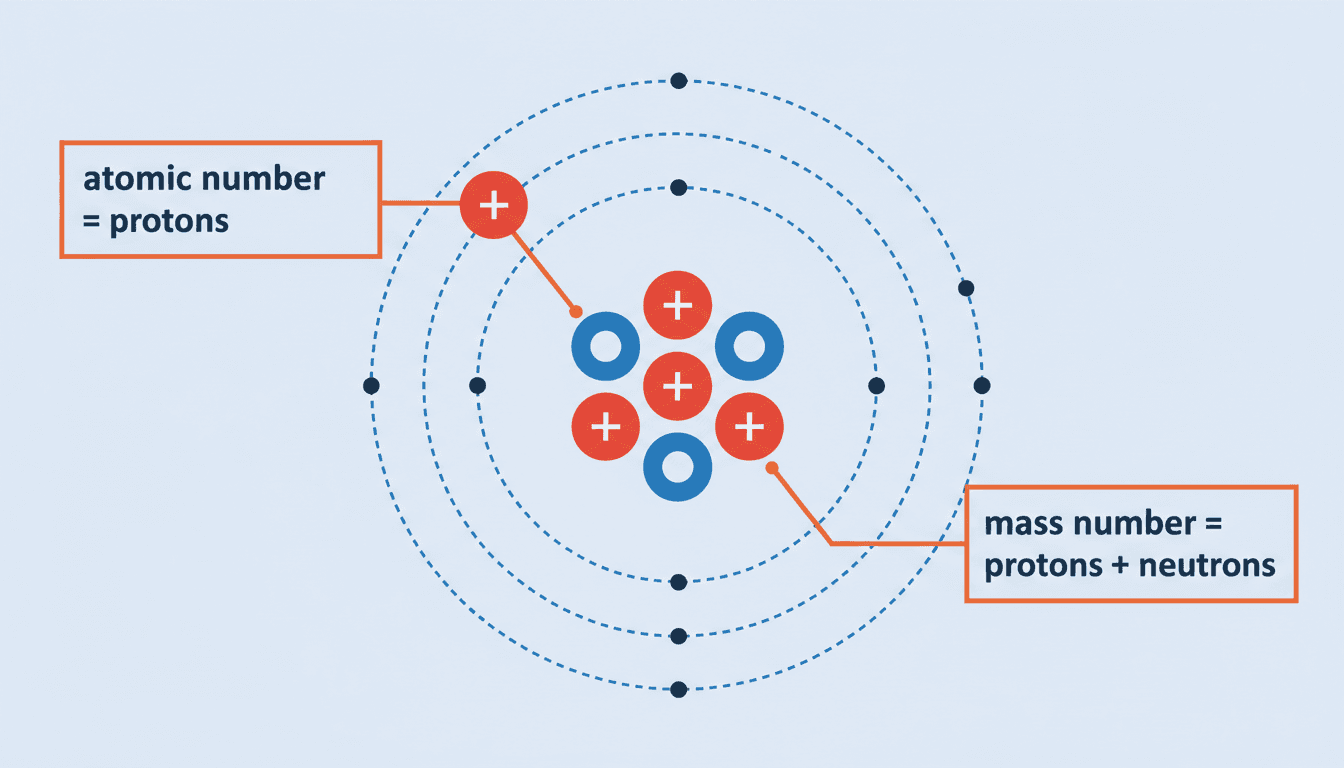
- Shortcut: Atomic mass (A) = protons + neutrons; ignore electron mass (1/1836th of a proton)
- Example: An atom with 6 protons and 8 neutrons is Carbon-14 (6p = Z=6 → carbon)
Periodic Table Hacks for Nursing Students
The HESI A2 prioritizes four periodic trends with 91% frequency in our question bank analysis:
- Electronegativity: Increases left → right, decreases top → bottom (F = 4.0 highest)
- Atomic radius: Opposite pattern - largest atoms are bottom-left (Fr)
- Ionization energy: Energy to remove an electron - peaks at noble gases
- Metallic character: Most metallic = bottom-left (vs nonmetals upper-right)
Exam Hack: For any "which element..." comparison question, sketch a mini periodic table and mark trends directly on it during the 25-minute section.
Chemical Bonds: Spot Ionic vs Covalent in 15 Seconds
Three decision rules for bond identification:
- Ionic: Metal + nonmetal (e.g. NaCl)
- Polar covalent: Two nonmetals with ΔEN ≥ 0.5 (e.g. H₂O, ΔEN=1.4)
- Nonpolar covalent: ΔEN < 0.5 (e.g. O₂, ΔEN=0)
Trap Alert: 68% of errors occur when candidates miss borderline cases (e.g. HCl has ΔEN=0.9 - polar covalent, not ionic). Our interactive practice test trains recognition speed.
Reaction Types Tested Every Cycle
HESI A2 Chemistry questions classify these four reactions most frequently:
| Type | Pattern | Example |
|---|---|---|
| Synthesis | A + B → AB | 2H₂ + O₂ → 2H₂O |
| Decomposition | AB → A + B | 2HgO → 2Hg + O₂ |
| Single replacement | A + BC → AC + B | Zn + 2HCl → ZnCl₂ + H₂ |
| Double replacement | AB + CD → AD + CB | AgNO₃ + NaCl → AgCl + NaNO₃ |
5 Chemistry Section FAQs
1. What's the hardest topic in HESI A2 Chemistry?
Stoichiometry calculations trip 41% of test-takers—but only ~3 questions typically require balanced equations. Focus first on atomic structure (8-12 questions per test).
2. Is organic chemistry included?
No. The 2026 test blueprint excludes hydrocarbons, functional groups, and IUPAC naming per Elsevier's guidelines.
3. Do I need to memorize the entire periodic table?
No—know group/period trends plus these high-yield elements: H, C, N, O, Na, K, Ca, Fe, Cl. See more in our 60-day study plan.
4. How many pH questions appear?
Typically 2-3. Memorize: pH <7 = acid, pH=7 neutral, pH>7 base. The logarithmic scale means pH 5 is 10x more acidic than pH 6.
5. What's the fastest way to improve scores?
Drill atomic structure + periodic trends (70% of content), then bonds + reactions. Skip nuclear chem—only 1% of question banks cover it. For timing strategies, see proctoring analysis.
Frequently Asked Questions
Related Posts
View all articles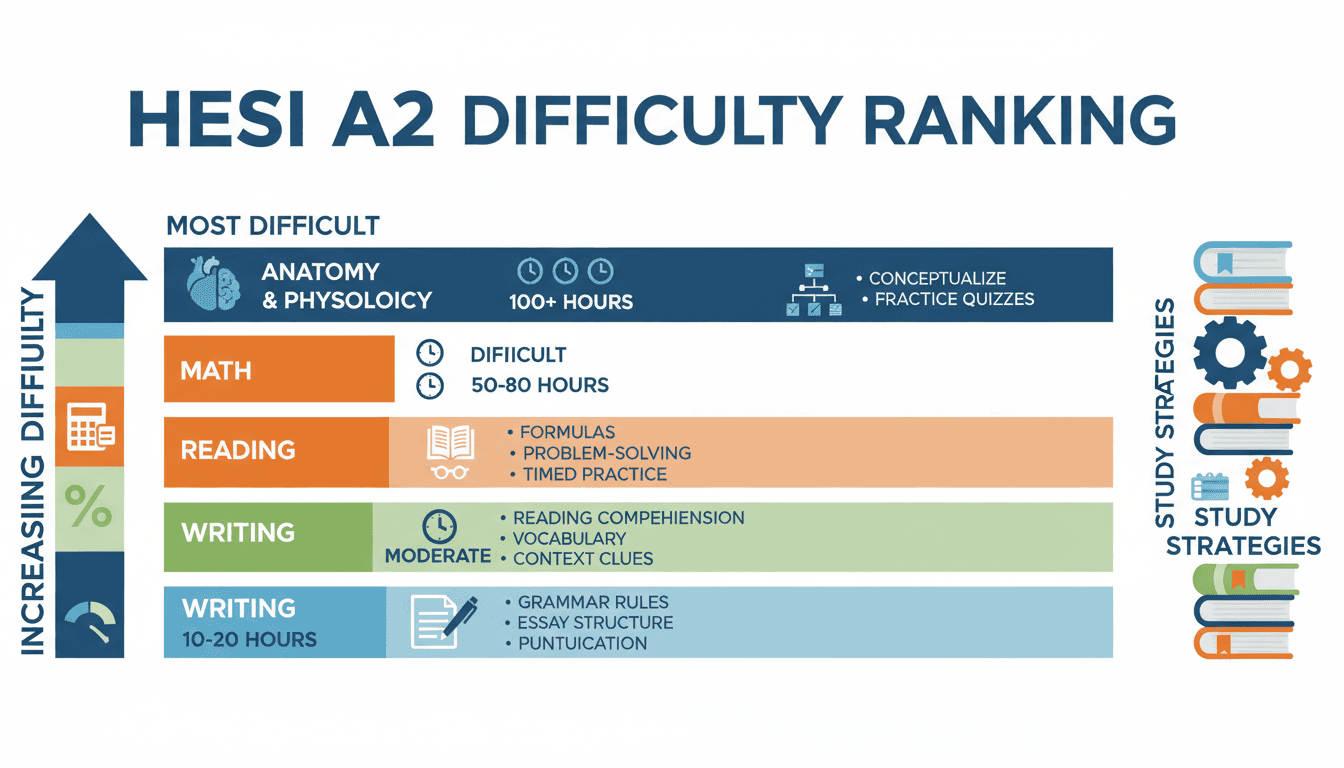
Hardest HESI A2 Sections Ranked 2026: Where to Spend Your 40 Hours
Discover the hardest HESI A2 sections in 2026, study tips, and a 40-hour plan to ace the exam.
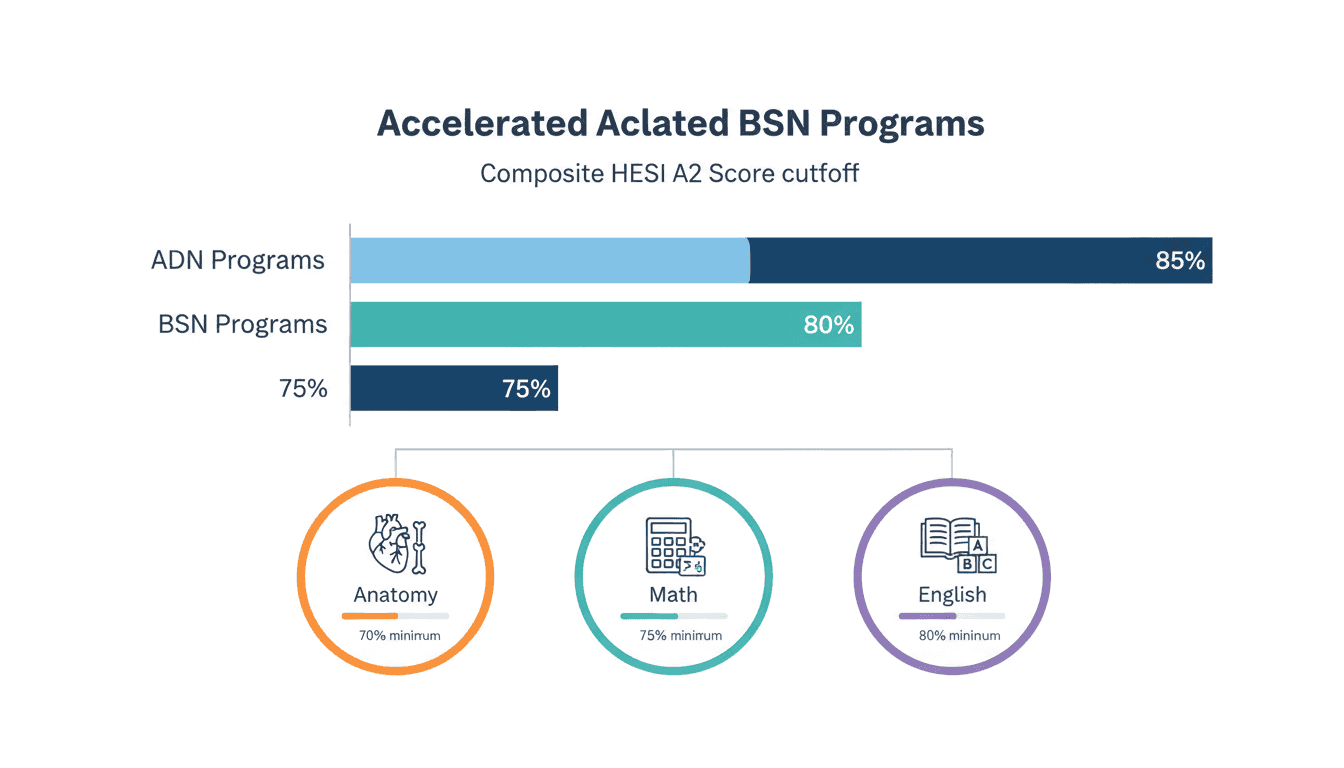
HESI A2 Scores by School: 75 vs 85 vs 90 Cutoffs + What to Retake
HESI A2 score requirements by school range from 58% to 92%, with competitive BSN programs demanding 85%+ composites and strict section minimums.
HESI A2 Practice Test Strategy: How to Use 1000+ Questions to Hit 90%+
A step-by-step strategy to use 1000+ HESI A2 practice test questions efficiently, targeting 90%+ scores through diagnostic assessment, focused drills, and timed