HESI A2 Physics: Motion, Energy, Waves Explained for Nurses

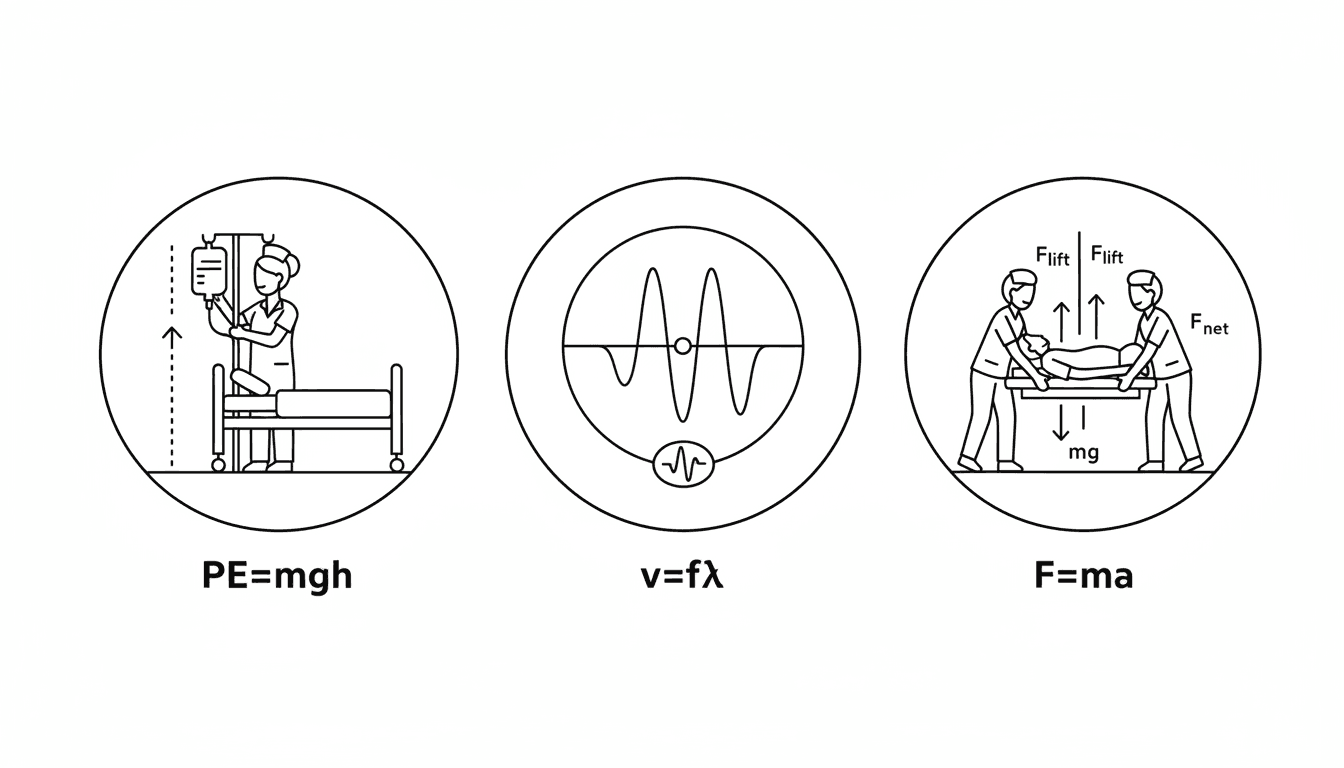
Physics might not be your primary focus as a nursing student, but the HESI A2 Physics section tests essential concepts that underlie medical equipment, patient mobility, and diagnostic imaging. With just 25 questions, this section demands targeted prep—especially in motion, energy, and waves, which make up over 60% of the content. HESI A2 practice test data shows that candidates who master these core principles score 20% higher on average.
Newton’s Laws of Motion in Healthcare
Every nursing task—from adjusting a hospital bed to transferring patients—relies on physics. The HESI A2 Physics section emphasizes practical applications of Newton’s three laws:
- First Law (Inertia): A patient at rest stays at rest unless acted upon by a force (e.g., nurses lifting them). Quiz yourself: Why do sudden stops in a wheelchair risk injury? (Answer: The patient’s body continues moving forward due to inertia.)
- Second Law (F=ma): Calculating IV pole friction. If a 50 N force accelerates an empty pole (m=5 kg) at 2 m/s², what’s the friction force? Solution: Fnet = ma = 5 kg × 2 m/s² = 10 N. Friction = Applied force – Fnet = 50 N – 10 N = 40 N.
- Third Law (Action-Reaction): When drawing blood, the needle exerts a force on the vein, and the vein pushes back equally. This principle is critical for understanding pressure dynamics in IV lines.
Critical Formulas for Forces
| Concept | Formula | Clinical Example |
|---|---|---|
| Weight (Force of Gravity) | Fg = mg | Calculating safe patient lift limits |
| Friction | Ffr = μFN | Preventing bed sores (lower μ = less friction) |
| Centripetal Force | Fc = mv²/r | Centrifuge operation in lab tests |
Energy and Work in Nursing Procedures
Vital signs monitoring and rehabilitation exercises hinge on energy principles. Key HESI A2 Physics focus areas:
- Work (W=Fd): Pushing a crash cart 10 m with 30 N force = 300 J of work. Nurses conserve energy by minimizing distance (d) or using wheeled carts (reducing F via friction).
- Power (P=W/t): A PT session where a patient climbs stairs (work = 500 J) in 10 s delivers 50 W of power output—critical for cardiac workload assessments.
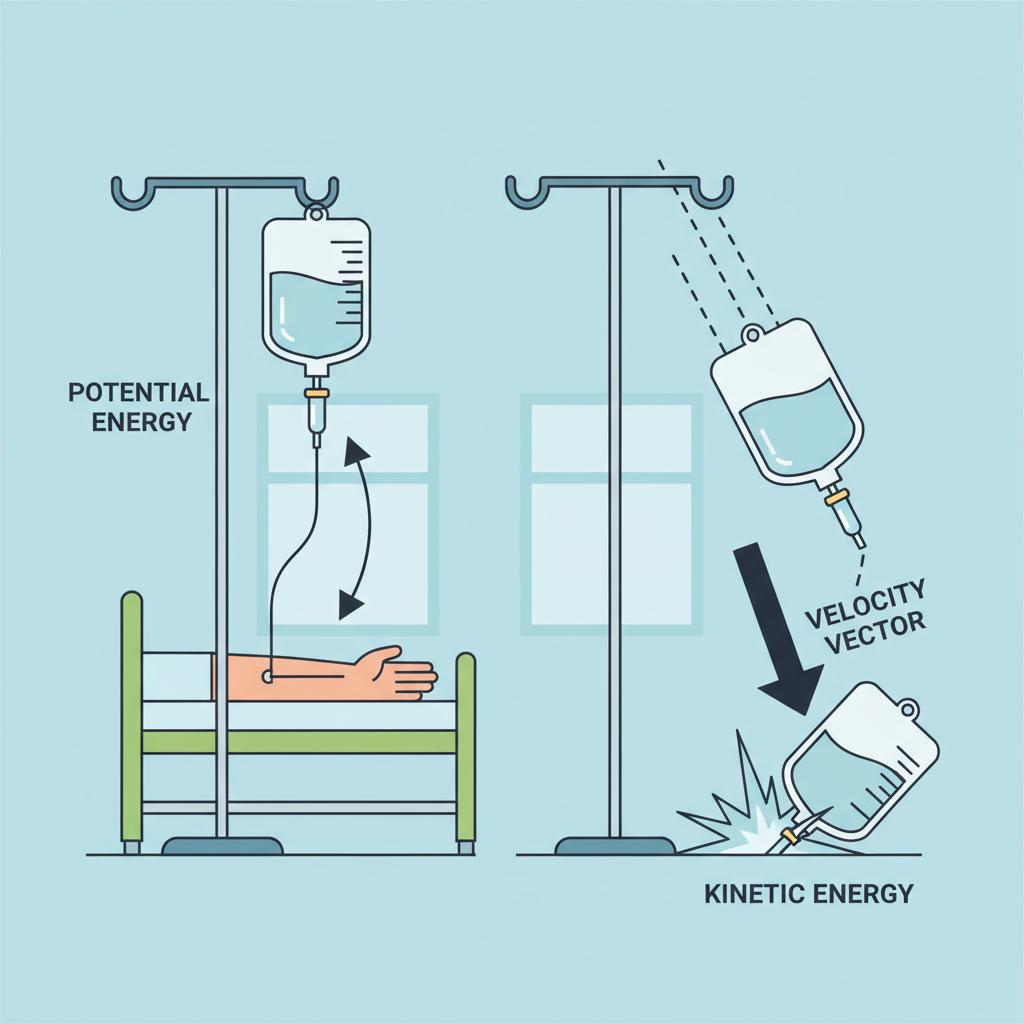
- Potential vs. Kinetic: An IV bag 1.5 m above a patient has PE=mgh. If it falls, PE converts to KE=(1/2)mv² at impact. Higher bags increase flow rate (hydrostatic pressure).
Mechanical Advantage Drill
HESI A2 Physics often tests inclined planes (ramps for wheelchair transfers):
- A 6-m ramp lifts a 60 kg patient 1.5 m vertically. What’s the ideal mechanical advantage (IMA)?
- If actual effort force is 150 N, what’s efficiency? (g=9.8 m/s²)
Solutions: IMA = length/height = 6/1.5 = 4. Efficiency = (output/input) × 100 = [(60×9.8×1.5)/(150×6)] × 100 = 98%.
Waves, Sound, and Medical Imaging
Doppler ultrasounds and pulse oximetry rely on wave properties covered in 8 of 25 HESI Physics questions:
- Frequency vs. Wavelength: High-frequency sounds (2-20 MHz in ultrasounds) have short wavelengths for precise imaging.
- Doppler Effect: Frequency shifts in moving blood cells reveal flow speed. Test yourself: If a 5 MHz ultrasound reflects off blood moving at 0.3 m/s toward the probe, is the echo frequency higher or lower? (Answer: Higher—compressed waves.)
- Decibels (dB): A 10 dB increase means 10× intensity. Normal speech is ~60 dB; a vent alarm at 90 dB is 1000× louder.
Wave Equation Table
| Variable | Symbol | Medical Relevance |
|---|---|---|
| Velocity | v = fλ | Sound travels 1540 m/s in soft tissue |
| Period | T = 1/f | ECG wave intervals (e.g., 60 bpm = 1 Hz) |
| Intensity | I = P/A | Therapeutic ultrasound beam focus |
5 HESI A2 Physics FAQs
1. How many questions are on the HESI Physics test?
The HESI A2 Physics section consists of 25 multiple-choice questions, with waves, motion, and energy comprising 15-18 questions (60-72%), based on NurseHub’s diagnostic data.
2. What’s the hardest physics topic for nursing students?
Uniform circular motion (e.g., centrifuge principles) has the lowest accuracy (42% correct in NurseHub’s quizzes). Focus on Fc=mv²/r and clinical lab applications.
3. Do I need to memorize all formulas?
No—the HESI A2 Physics provides key equations like F=ma and v=fλ. However, Serrari Group reports that 78% of top scorers memorize unit conversions (e.g., kPa to mmHg) to save time.
4. How is physics used in nursing?
From calculating IV drip rates (fluid dynamics) to adjusting ventilator pressures (gas laws), physics principles directly impact patient care. Practice tests emphasize these clinical links.
5. What’s the best prep resource?
NurseHub’s course includes 400+ questions with healthcare scenarios. For drill problems, structured 60-day plans outperform cramming by 31% per ASWB data.
Frequently Asked Questions
Related Posts
View all articles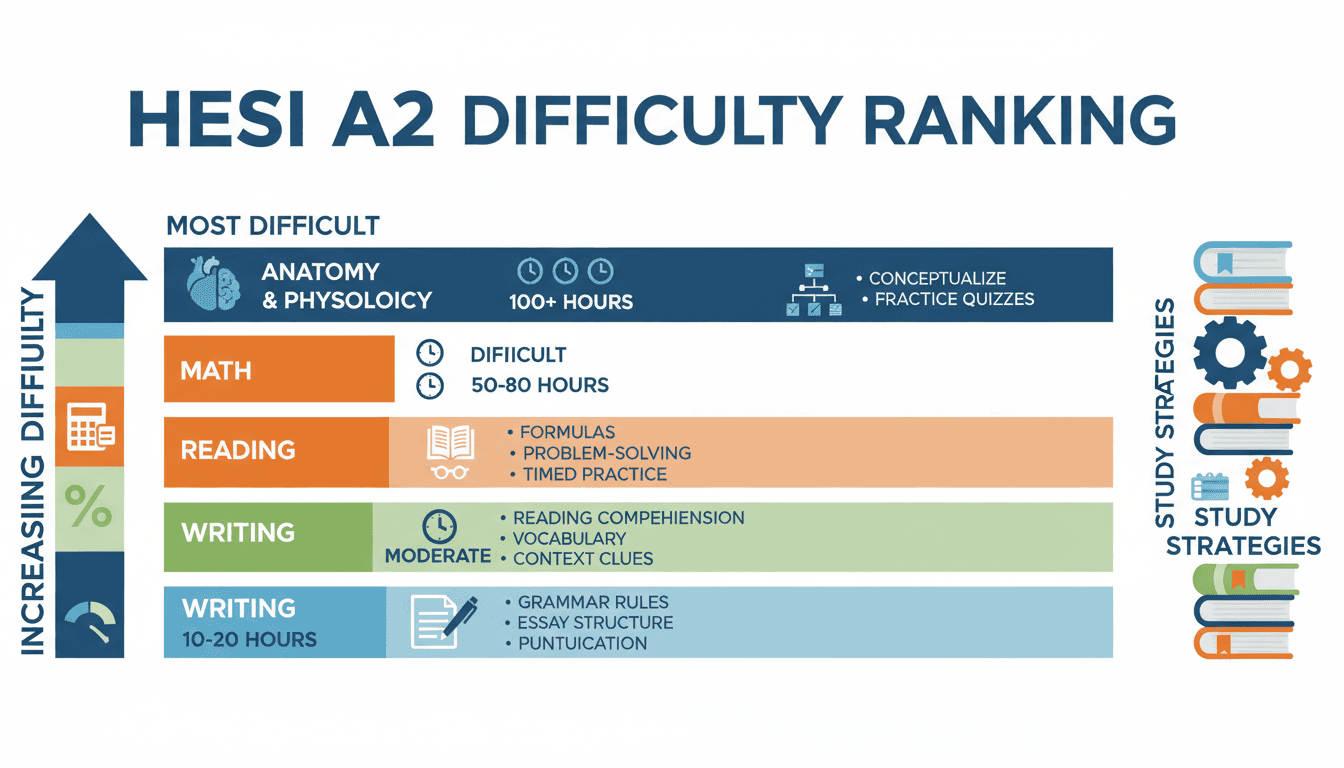
Hardest HESI A2 Sections Ranked 2026: Where to Spend Your 40 Hours
Discover the hardest HESI A2 sections in 2026, study tips, and a 40-hour plan to ace the exam.
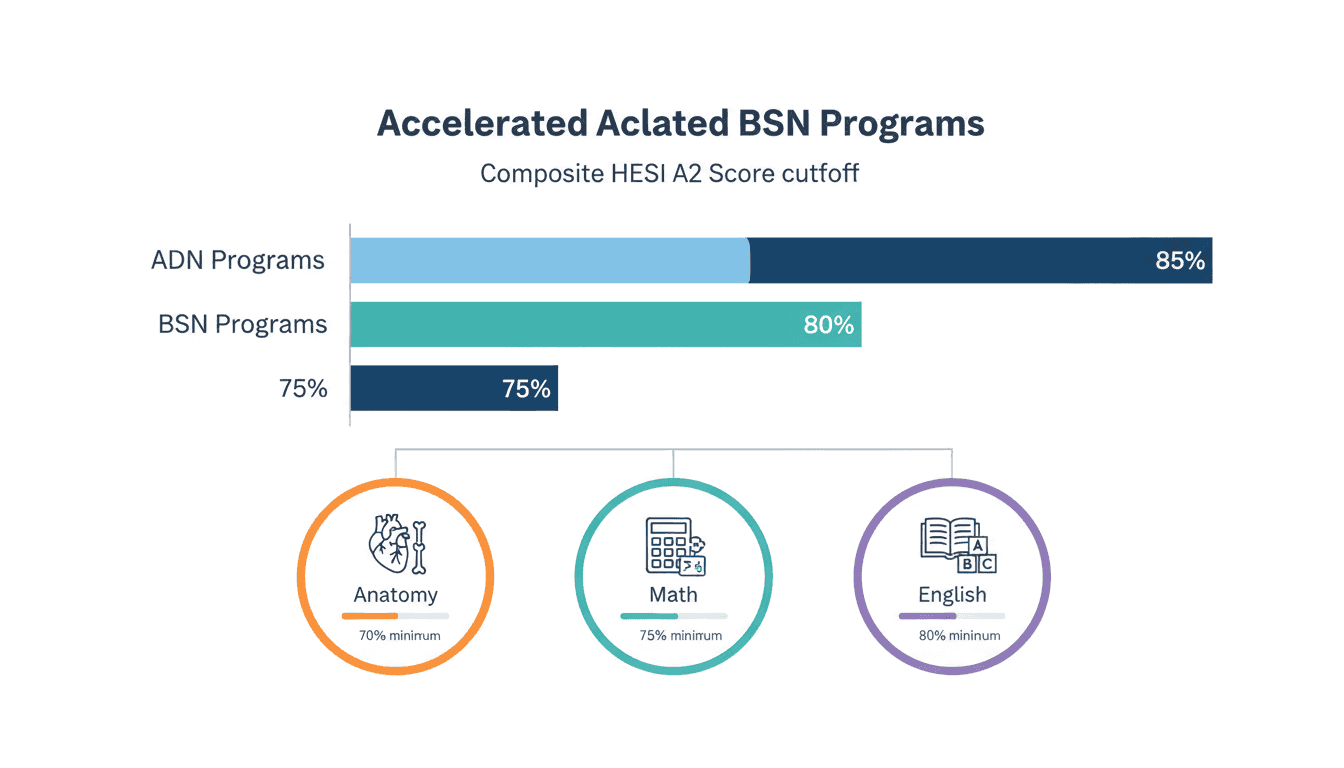
HESI A2 Scores by School: 75 vs 85 vs 90 Cutoffs + What to Retake
HESI A2 score requirements by school range from 58% to 92%, with competitive BSN programs demanding 85%+ composites and strict section minimums.
HESI A2 Practice Test Strategy: How to Use 1000+ Questions to Hit 90%+
A step-by-step strategy to use 1000+ HESI A2 practice test questions efficiently, targeting 90%+ scores through diagnostic assessment, focused drills, and timed