HESI A2 Reading Comprehension: Test-Taking Strategies That Work


Reading Comprehension is the most approachable section on the HESI A2, and it is also the section students most often underprepare for. It does not require memorizing a body of facts. It requires a repeatable method: read with purpose, identify what each question is really asking, and manage your time across roughly 47 questions in 60 minutes.
This guide gives you the exact method, including the question types you will see, how to find the main idea, how to make safe inferences, and how to read for vocabulary in context. For the overall exam plan, our HESI A2 study guide shows how reading fits with the other sections.
What the Reading Section Tests
The Reading Comprehension section has 47 scored questions plus a few unscored pilot items, and you get 60 minutes to answer them. You will read several passages, each around 300 to 500 words, and answer questions about what the passage says and implies.
The passages cover topics you might see in nursing school, including health, science, history, and everyday practical subjects, but you never need outside knowledge. Every answer must be supported by the passage itself. The HESI A2 section breakdown from OpenExamPrep notes that reading is a passage-based section where strong readers score well naturally, which makes it a great place to build confidence and bank points.
Know the Question Types Before You Start
Every reading question on the exam fits into one of six families. Once you can name the family, you know what the answer needs to do.
| Question type | What it asks | How to answer it |
|---|---|---|
| Main idea | What the passage is mostly about | Choose the option that covers the whole passage, not one paragraph |
| Supporting detail | A specific fact the passage states | Return to the passage and match the exact wording |
| Inference | What the passage suggests without stating | Pick the option that follows logically and stay close to the text |
| Purpose | Why the author wrote the passage | Decide whether the author informs, persuades, or entertains |
| Tone | The author's attitude | Choose a tone word the passage supports, such as neutral, critical, or supportive |
| Vocabulary in context | What a word means in the sentence | Replace the word with each option and pick the one that fits |
The Best Way to Read a Passage
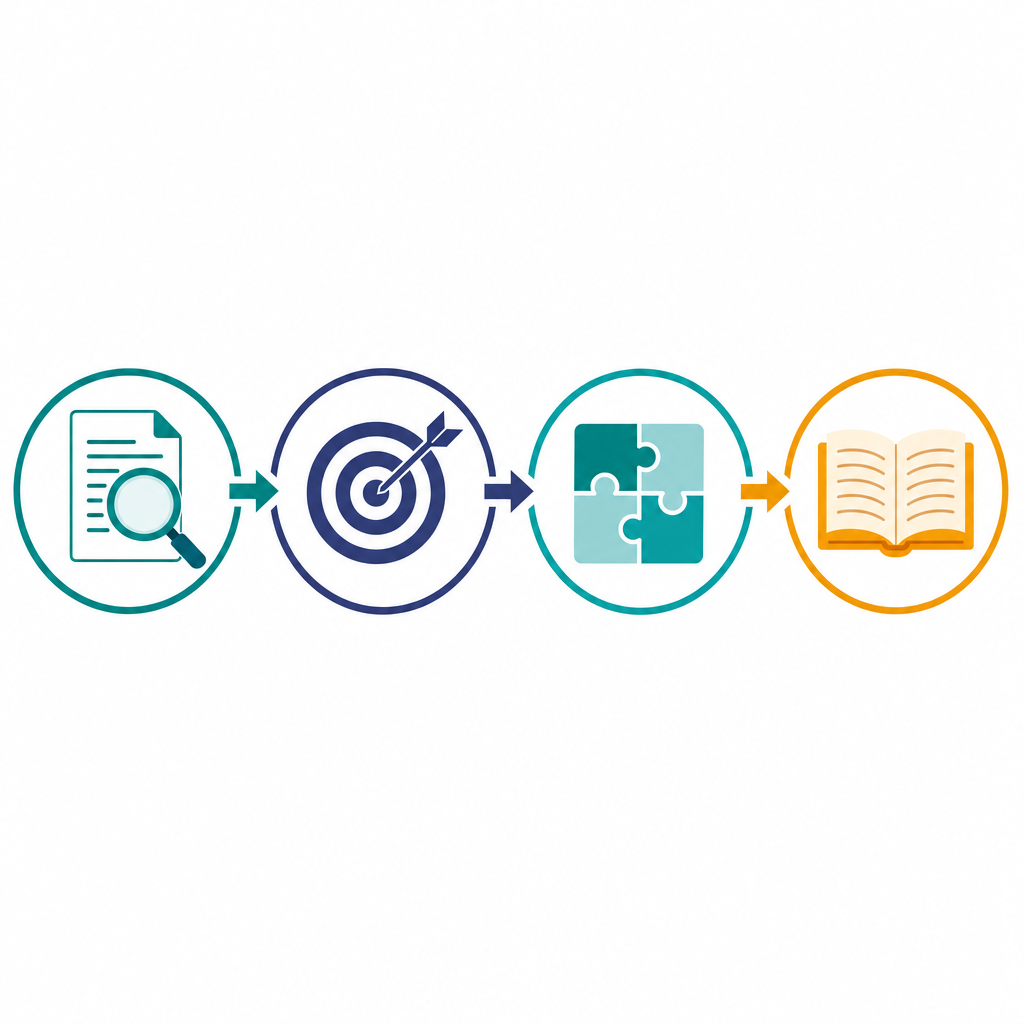
Most students read the passage front to back and then discover the questions ask about details they skimmed past. Instead, use this sequence:
- Read the first paragraph and the first sentence of each paragraph. This gives you the skeleton of the passage and usually the main idea.
- Read the questions quickly, without the answer choices, so you know what to look for.
- Read the passage in full, marking the main idea and any sentences that look like answers to the questions you saw.
- Answer each question, and for detail questions, verify the exact sentence in the passage before choosing.
This method takes the same total time as reading once, but it produces answers you can defend, which is exactly what the scoring rewards.
Main Idea vs. Supporting Details
The main idea is the one idea the whole passage supports. It usually appears in the first paragraph, and the topic sentence of each paragraph restates a piece of it. Supporting details are the facts, examples, and explanations that back it up.
To separate them, ask a simple test: would removing this option make the passage incomplete? If yes, it is likely the main idea. If the option is a specific fact like a date, a number, or a single example, it is a supporting detail and therefore a wrong answer for a main idea question.
Making Inferences Without Overreaching
Inference questions are where students lose points, because the wrong answers feel reasonable. An inference on the HESI A2 must be a logical next step from the text, not a general life lesson. The passage says the patient refused breakfast because of nausea. A safe inference is that the patient may not feel ready to eat. An overreach is that the patient has a chronic digestive condition, because the passage gives no evidence for it.
Use the evidence rule: underline the sentence that supports your inference. If you cannot point to a sentence, the option is too far from the text.
Vocabulary in Context
Some questions ask what a word or phrase means as it is used in the passage. The definition is almost always hinted by the surrounding sentences through context clues:
- Definition clues: the sentence defines the word directly, often after a comma or dash.
- Contrast clues: words like however, although, and unlike signal an opposite meaning.
- Example clues: the sentence lists examples that suggest the category the word belongs to.
- Logic clues: the rest of the sentence tells you whether the word fits a positive or negative situation.
When in doubt, plug each answer choice into the sentence and pick the one that keeps the meaning intact.
Time Management That Works
With 47 questions in 60 minutes, you have just over one minute per question, and some passages will eat more. Use this plan:
- Budget about 8 to 10 minutes per passage, including its questions.
- Do not linger on a question. Mark your best answer, move on, and return only if time allows.
- Answer every question, because there is no penalty for a wrong guess and pilot questions mean some items do not count anyway.
- Track the clock by section, not by question, and use any leftover minutes to review flagged items.
A Practice Plan for Reading
Reading improves with deliberate practice, not just volume:
- Read one practice passage a day under timed conditions, then review every question, right or wrong.
- After each passage, write the main idea in one sentence from memory. If you cannot, reread the first and last paragraphs.
- For inference questions you miss, write down which sentence should have supported the correct answer.
- Build stamina by taking one full timed reading section per week as exam day approaches.
Practice with the real format matters more here than in any other section. Our HESI A2 prep page includes timed reading practice tests that mirror the passage and question style you will see, and our vocabulary guide sharpens the context-clue skills this section depends on.
Final Thoughts
Reading Comprehension rewards method over memorization. Learn to name the question types, read with a purpose, and verify every answer against the passage, and the section becomes one of your most reliable score contributors. Practice one passage a day, manage the clock, and you will walk into the exam with a strategy that works.
Frequently Asked Questions
Related Posts
View all articles
CNA Measurement Questions: Intake, Output, Weight, Pulse, and Respirations
Learn how to answer CNA measurement questions on intake, output, weight, pulse, and respirations, including conversions, normal ranges, and report thresholds.

CNA Observation vs. Reporting: Which Changes in a Resident's Condition Matter Most?
Learn which changes in a resident's condition matter most for CNA observation and reporting, and how to describe them objectively so the nurse can act quickly.

CNA Delegation Questions: Knowing When to Report Instead of Acting
Learn how to answer CNA delegation questions: know your scope of practice, the five rights of delegation, and when to report to the nurse instead of acting.