CNA Observation vs. Reporting: Which Changes in a Resident's Condition Matter Most?


Nurse aides spend more time with residents than anyone else on the care team, which is why observation and reporting questions show up so often on the CNA written exam. The exam wants to know two things: can you tell a meaningful change from a normal variation, and do you know when to report it and to whom. Getting both right is what keeps residents safe between nursing assessments.
This guide covers the changes that matter most, the difference between immediate and routine reports, and how to describe what you saw so the nurse can act fast. It is built around the official framework the care team uses, and it ends with practice links so you can test yourself.
Your Role: Observer First
Every meaningful report starts with observation. The resident's baseline is your measuring stick: how the resident usually looks, acts, eats, and breathes. A change from baseline is the signal that something may be wrong, and it is the reason the team relies on you. The Agency for Healthcare Research and Quality, which develops the national guidance for long-term care, calls front-line staff the eyes and ears of the team in its training module on detecting changes in a resident's condition.
The same training that prepares nurse aides for this role is written into federal regulation: certified aides are taught to recognize abnormal changes in body functioning and to report them to a supervisor. The official rule appears in 42 CFR 483.152, the federal nurse aide training standard. Observing and reporting is not a courtesy. It is the job.
The Changes That Matter Most
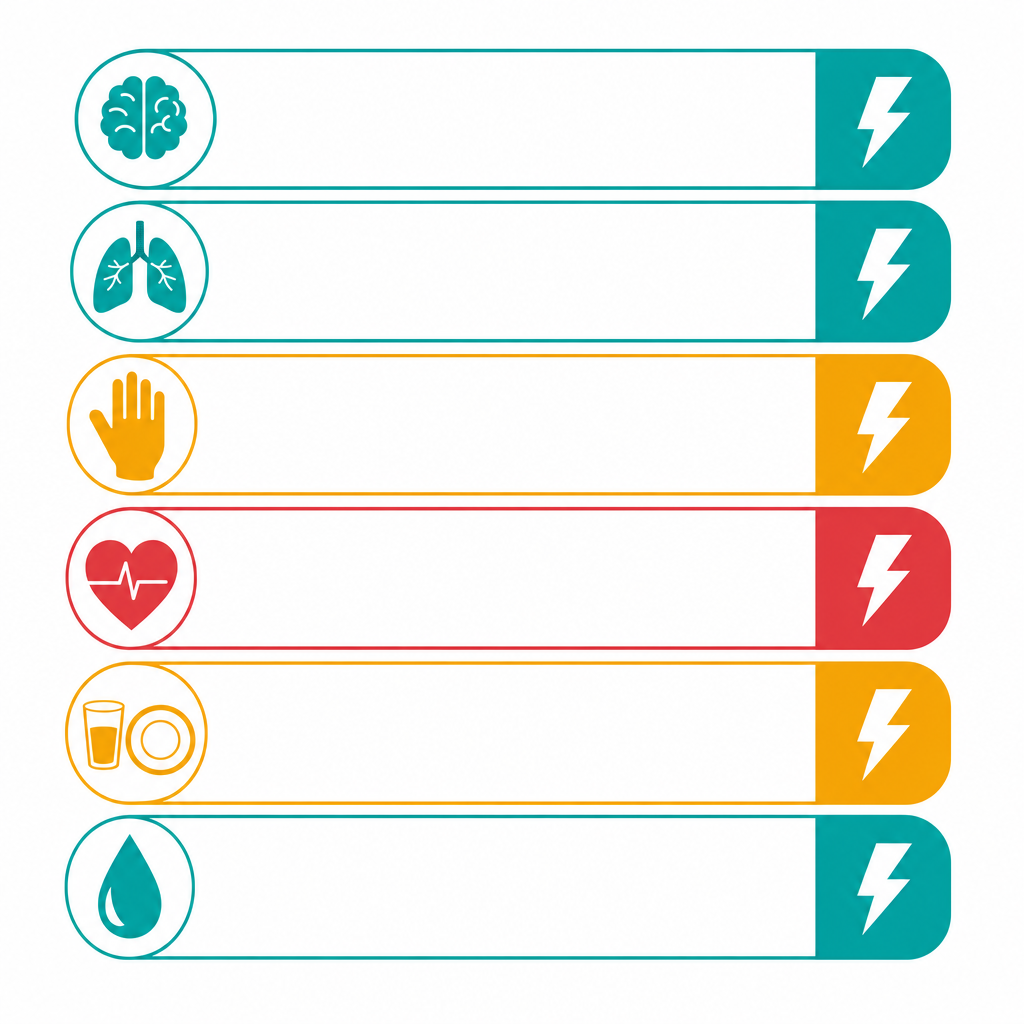
Not every change needs the same speed of response, but these categories are the ones the exam tests over and over:
| Category | What to watch for | Speed of report |
|---|---|---|
| Mental status | Sudden confusion, drowsiness, agitation, trouble speaking | Immediately |
| Breathing | Shortness of breath, labored or noisy breathing, bluish lips | Immediately |
| Skin | New redness, open areas, tears, warmth, swelling | Immediately |
| Pain | New, sudden, or worsening pain, or pain that keeps the resident from eating or moving | Immediately |
| Eating and drinking | Refusing meals, eating or drinking much less than usual | Same shift |
| Elimination | Little or no urine output, blood in urine or stool, severe diarrhea | Immediately |
| Vital signs | Any measurement outside the resident's normal range | Immediately |
| Mood and behavior | Withdrawal, crying, sudden fear, change in usual routine | Same shift |
Two rules of thumb simplify the list. First, sudden or severe changes are immediate reports. Second, gradual or mild changes are same-shift reports unless they involve refusal of care, which always gets reported. When in doubt, report sooner. No nurse has ever complained that an aide reported too early.
Immediate vs. Routine Reports
Knowing the difference between report now and report at handoff is a tested skill. Here is how the two buckets divide:
- Report immediately: a fall or injury, sudden confusion or drowsiness, trouble breathing, chest pain, new bleeding, seizure, refusal to eat or drink, abnormal vital signs, or any complaint of sudden severe pain.
- Report during the shift or at handoff: gradual loss of appetite, new mild discomfort, changes in mood or sleep, a resident who is less talkative, or a small change in how much the resident ate compared with last week.
The exam traps students by hiding an immediate report in a routine wrapper. A question about a resident who is "a little more tired today" is testing whether you ask one more question: is this a gradual pattern, or a sudden change from this morning? Sudden always wins.
How to Describe What You Saw
A report is only as good as its details. Describe what you observed in facts: what changed, when you first noticed it, where it is on the body, and how much or how severe. Use the resident's words when you can, in quotation marks. Leave out interpretations like "he looks like he is having a stroke" and stick to "he suddenly cannot speak clearly and his right arm is weak." The nurse makes the medical interpretation; your job is the facts.
This is also the point of the SBAR handoff: situation, background, assessment, and recommendation. You do not need the full format as an aide, but its first two parts are exactly what a good report contains: the situation now, and the background of what is normal for that resident. Keeping that structure in mind will make your reports complete and easy to understand.
After You Report: Document
Reporting is only half the task. You also chart what you observed, what you reported, who you told, and the time. Document only what you personally saw, heard, or measured, and write it promptly in plain language. Never chart the nurse's assessment as your own, and never wait until the end of the shift to record a change you already reported. If the resident is waiting for the nurse, stay nearby and keep the resident safe and comfortable.
The connection between observation and scope of practice is covered in our guide to delegation and when to report instead of acting, and the order of operations when a resident's safety is at stake is in our guide to CNA priority questions.
Practice Your Observation Skills
Observation and reporting questions live mostly in the Role of the Nurse Aide domain, and they reward clear thinking over memorization. Work through the free Role of the Nurse Aide practice test to see the question styles, then build endurance with the full-length CNA mock exam. When you review a missed question, ask yourself which part failed: noticing the change, judging its urgency, or describing it.
Final Thoughts
Observation and reporting is the aide's most important contribution to the care team. Notice the change from baseline, judge whether it is sudden or gradual, describe it in facts, and report it to the right person at the right time. Residents are safest when the aide reports one change too many, not one too few.
Keep the categories in this guide in mind during every shift and on every practice test, and the observation questions will start to feel like the easy ones.
Frequently Asked Questions
Related Posts
View all articles
CNA Measurement Questions: Intake, Output, Weight, Pulse, and Respirations
Learn how to answer CNA measurement questions on intake, output, weight, pulse, and respirations, including conversions, normal ranges, and report thresholds.

CNA Delegation Questions: Knowing When to Report Instead of Acting
Learn how to answer CNA delegation questions: know your scope of practice, the five rights of delegation, and when to report to the nurse instead of acting.
CNA Priority Questions: How to Decide What the Nurse Aide Should Do First
Learn how to answer CNA priority questions by using the ABCs, Maslow's hierarchy, and a simple safety-first order to decide what the nurse aide should do first.