CNA Priority Questions: How to Decide What the Nurse Aide Should Do First

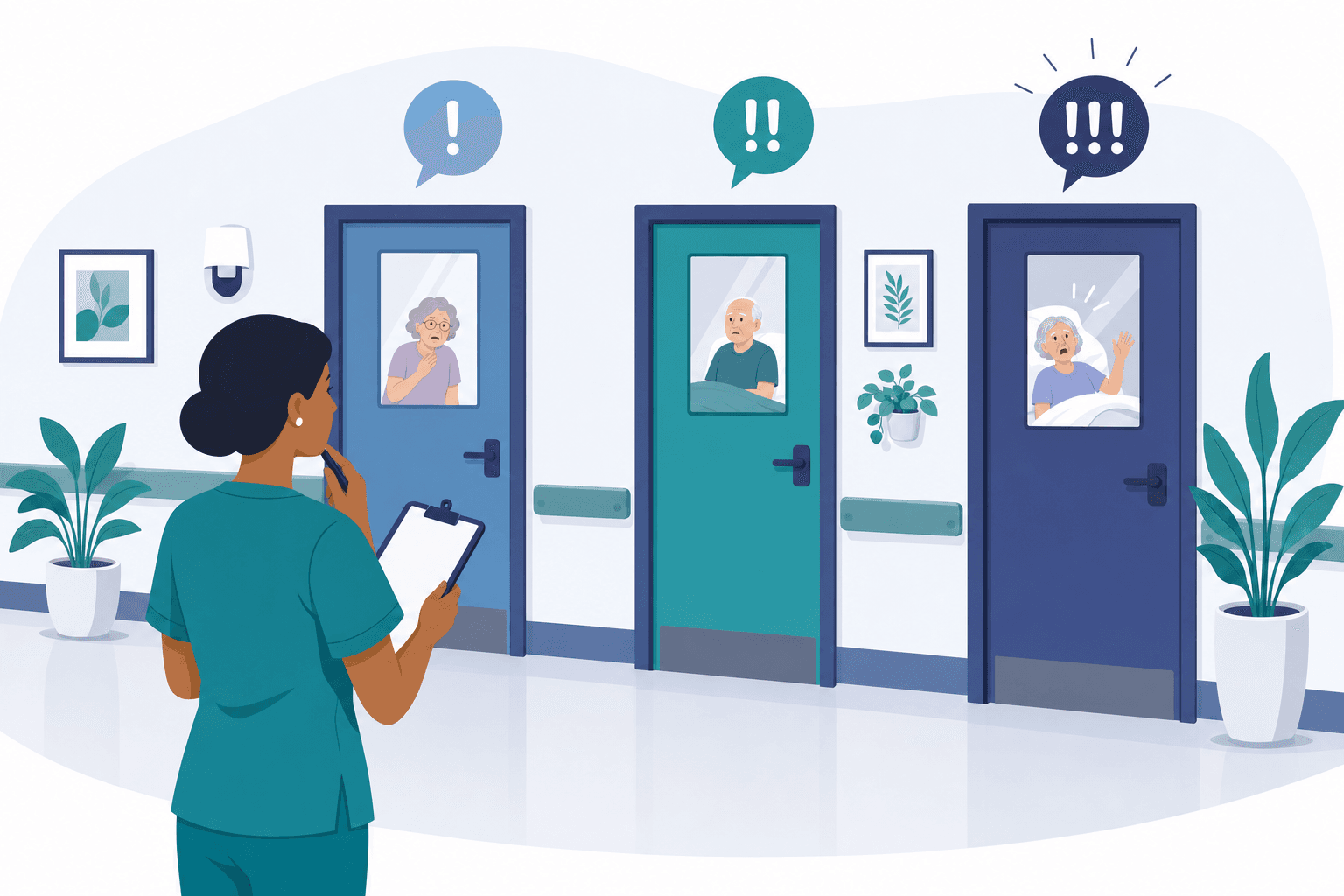
Priority questions are the questions students fear most on the CNA written exam, and the ones the test leans on the heaviest. The stem usually ends with a word like FIRST, INITIAL, or PRIORITY, and the options are a list of actions that all sound like something a nurse aide does. The question is not asking what you know. It is asking how you rank what you know when time and safety are on the line.
The good news is that priority questions run on a small set of rules, and the exam uses them the same way every time. Once you learn the order, the questions stop being scary. This guide covers the ABCs, Maslow's hierarchy, the safety rule, and a simple decision sequence you can run on any priority question, with practice links at the end.
What Priority Questions Look Like
Priority questions come in two common shapes. The first is the multi-patient or multi-task version: the aide has several residents or tasks, and the question asks which one to see or do first. The second is the chain-of-events version: something happens, and the question asks what the aide should do first, next, or immediately.
Signal words are your first clue. Look for FIRST, INITIAL, PRIORITY, BEST, IMMEDIATELY, and NEXT. When you see them, the question is asking for the most urgent action, not the most thorough, kind, or convenient one. A scheduled bath can wait. A resident who suddenly cannot breathe cannot.
Start with the ABCs
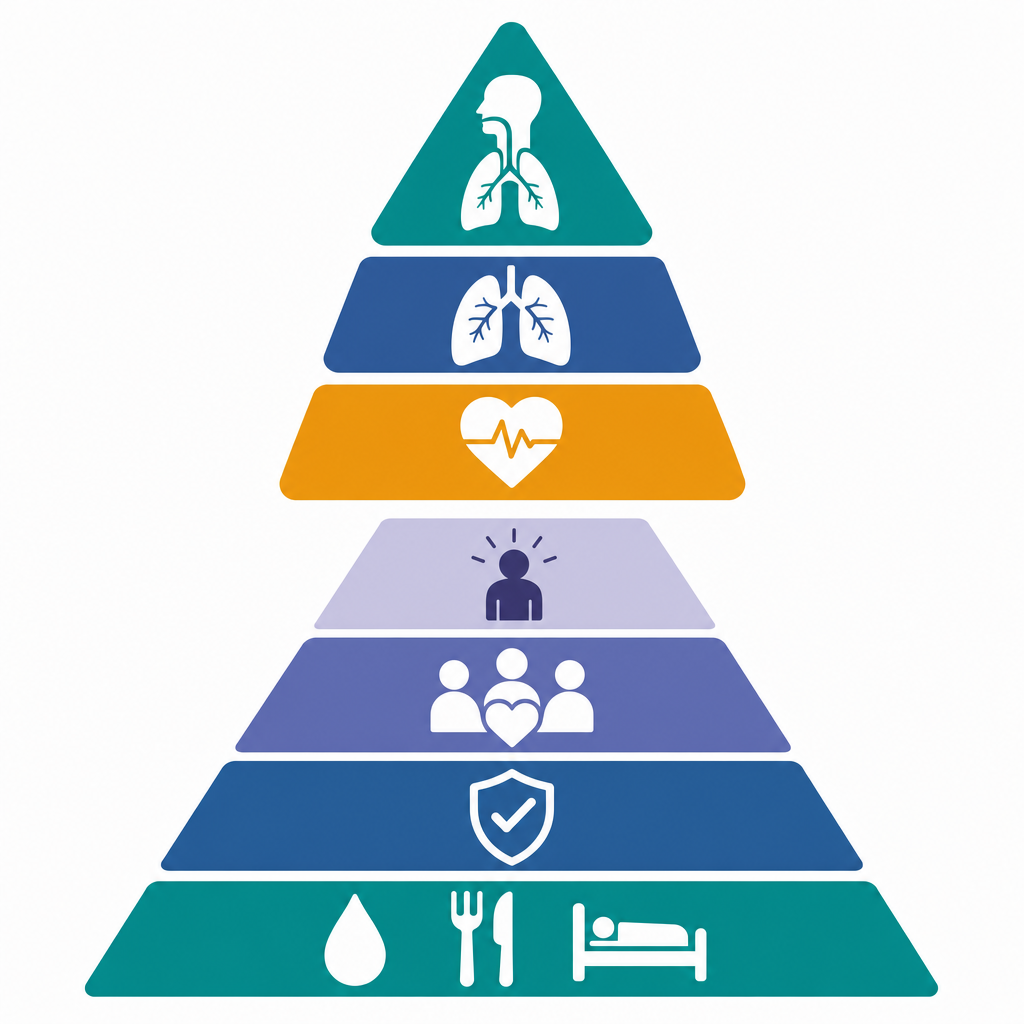
The ABCs are the non-negotiable starting point for every priority decision. They stand for airway, breathing, and circulation, and they rank the threats to life in order of how fast they can harm someone.
- Airway: is the airway open and clear? Choking, gagging, or noisy breathing beats everything.
- Breathing: is the resident getting air? Shortness of breath, labored breathing, or cyanosis means the aide acts and reports now.
- Circulation: is blood moving? A resident who is bleeding heavily, pale, or pulseless comes next.
If any option on the test involves a problem with airway, breathing, or circulation, that option wins. The nurse educator blog Straight A Nursing explains the ABCs and Maslow together with worked examples, and it is a useful review before test day.
Use Maslow's Hierarchy as the Tie-Breaker
When no one is in immediate ABC danger, priority moves to Maslow's hierarchy of needs. The rule for the CNA exam is simple: basic physical needs outrank safety needs, and safety needs outrank social and emotional needs. A resident who needs the bedpan, is hungry, or is in pain ranks above a resident who is lonely or bored, even though the social needs matter.
This is why elimination beats comfort on the exam. A resident who needs the bedpan and cannot wait has a pressing physical need. A resident asking for a blanket has a comfort need. The bedpan wins. Pain is also physical, and sudden severe pain is a high priority that should be reported to the nurse right away.
The Safety Rule Comes Second
Safety is the second layer after the ABCs. If a resident is at immediate risk of harm, that risk outranks every routine task, even when vital signs look fine. The classic exam example is a confused resident trying to climb out of bed while the aide is in the middle of making another bed. The aide acts to prevent the fall first, then finishes the bed.
Environmental hazards count too. A wet floor in the hallway, a spilled tray, or a fire alarm all change your priorities instantly. Safety for the resident and for yourself comes before completing the assignment.
A Simple Decision Order
You can collapse all of this into a five-step sequence that fits on a sticky note. Run it on every priority question:
- Scan every option for an ABC threat. If you find one, that is your answer.
- Look for immediate safety risk, like a fall, a spill, or a fire hazard.
- Look for an acute change or a new symptom, such as sudden confusion or sudden pain.
- Look for urgent physical needs, like elimination or refusal of food and fluids.
- Compare remaining routine and comfort tasks by what is scheduled, and pick what protects the resident.
| Priority level | Examples | Time sensitivity |
|---|---|---|
| Life threat (ABCs) | Trouble breathing, choking, heavy bleeding | Seconds |
| Immediate safety risk | Falling, wet floor, fire alarm | Minutes |
| Acute change in condition | Sudden confusion, sudden severe pain | Report immediately |
| Urgent physical need | Bedpan, refusal to eat or drink | Soon |
| Routine and comfort | Bath, linens, water pitcher | As time allows |
Common Traps to Avoid
Most priority mistakes come from a handful of predictable traps. The first is finishing what you are doing before addressing a new complaint. On the exam, the new symptom always beats the task in progress. The second is choosing the answer that feels kind instead of the one that is safe. Comfort never outranks breathing. The third is seeing residents as equal when they are not: if the test describes two residents, one of whom has a changing condition, the changing one comes first.
When every resident appears stable, the question is testing Maslow. Rank by physical need, then safety, then social and emotional care. If you practice this order until it is automatic, the traps stop working.
Practice with Real Questions
Priority logic only sticks with repetition. Work through the scenarios on our free CNA Physical Care Skills practice test, which is heavy on safety and emergency questions, then take the full-length CNA mock exam under time pressure. When you miss a priority question, do not just read the explanation: trace it back to this five-step order and name the step you skipped.
If a priority question leaves you with two correct-looking options, the reading method in our guide to CNA questions with two right answers shows how to break the tie. And remember that the first move on many priority questions is a report: our guide to delegation and when to report instead of acting covers the cases where the right answer is to notify the nurse.
Final Thoughts
Priority questions are not about knowing every procedure. They are about ranking what you know: ABCs first, safety second, acute changes and physical needs next, and routine care last. Run the five-step order on every practice question, and the exam's priority traps will start to look the same.
Keep a one-line summary in your head on test day: life threats, then safety, then changes, then physical needs, then routine. Answer every FIRST question in that order and you will be right more often than not.
Frequently Asked Questions
Related Posts
View all articles
CNA Measurement Questions: Intake, Output, Weight, Pulse, and Respirations
Learn how to answer CNA measurement questions on intake, output, weight, pulse, and respirations, including conversions, normal ranges, and report thresholds.

CNA Observation vs. Reporting: Which Changes in a Resident's Condition Matter Most?
Learn which changes in a resident's condition matter most for CNA observation and reporting, and how to describe them objectively so the nurse can act quickly.

CNA Delegation Questions: Knowing When to Report Instead of Acting
Learn how to answer CNA delegation questions: know your scope of practice, the five rights of delegation, and when to report to the nurse instead of acting.